



S. Jaishankar Inaugurates Global Economic Cooperation 2026 in Mumbai

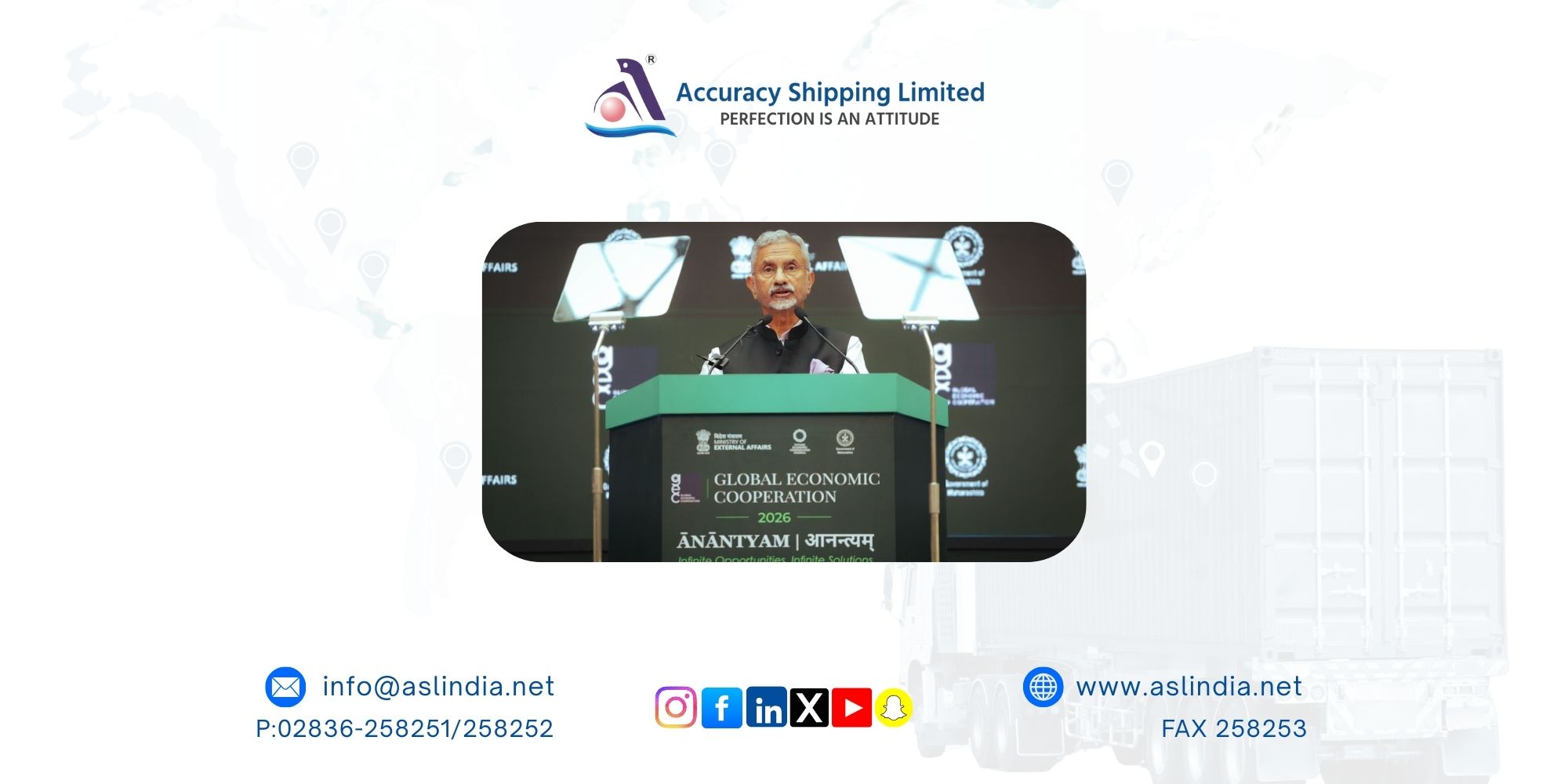
A Landmark Global Forum in India’s Financial Capital
S. Jaishankar, Hon’ble Union Minister for External Affairs, inaugurated the three-day Global Economic Cooperation (GEC) 2026 in Mumbai. The high-level international forum has been convened by the Future Economic Cooperation Council (FECC) in cooperation with the Ministry of External Affairs (MEA), Government of India, and the Government of Maharashtra.
The event is being organised with the support of Devendra Fadnavis, Hon’ble Chief Minister of Maharashtra and Chief Patron of FECC, underscoring the strategic importance of the forum for India’s global engagement.
A Forum at a Pivotal Global Moment
GEC 2026 comes at a time when global trade architecture and geopolitics are undergoing profound shifts. Senior ministerial and business delegations from France, the United Kingdom, the United Arab Emirates, the United States, Australia, Seychelles, and Sri Lanka are participating in the deliberations.
The forum aims to develop practical frameworks for resilient, inclusive, and future-ready economic cooperation in an increasingly multipolar world order. As economic power becomes more distributed, platforms like GEC 2026 are expected to foster collaboration, strengthen trust, and enable strategic partnerships across continents.
PM Narendra Modi’s Message: India as a Beacon of Stability
During the inaugural session, Shri Vijay Chauthaiwale, Executive Director of FECC and In-Charge Foreign Affairs, BJP, read a message from Narendra Modi.
In his message, the Prime Minister stated that in uncertain global times, India stands out as a beacon of hope, delivering practical and scalable solutions to global challenges while maintaining a rare balance of high growth and low inflation. He emphasised India’s role as a credible voice of the Global South and highlighted the transformative impact of Digital Public Infrastructure in ensuring efficient, transparent, and accountable welfare delivery.
Prime Minister Modi extended his best wishes for productive deliberations, expressing confidence that GEC 2026 can serve as a vital bridge connecting ideas, capital, and innovation, thereby laying the foundation for a more cooperative and interconnected global economic future.
Jaishankar: De-Risking and Diversification Essential
In his inaugural address, Dr. Jaishankar underlined that the world has entered an era of simultaneous transformation across strategic, political, economic, and technological dimensions. He stressed the importance of de-risking and diversification across sourcing, production, and markets.
He described GEC 2026 as a timely platform to deliberate on resilient supply chains, trusted partnerships, and balanced frameworks of economic cooperation. Reiterating India’s vision of Viksit Bharat 2047, he stated that India aims not only to contribute to global growth but also to global stability, predictability, and trust.
Fadnavis: Architecting the Next Framework of Cooperation
Chief Minister Devendra Fadnavis observed that the global order is recalibrating, with supply chains reorganising and strategic sectors such as semiconductors, energy, food security, rare earths, and artificial intelligence becoming integral to national security doctrines.
From Mumbai a city historically built on maritime trade and global engagement he called for shaping an economic order that is resilient, inclusive, and strategically stable. He emphasised that India’s rise is structural rather than accidental and that GEC 2026 provides a platform to architect the next framework of international cooperation.
Industry Leadership and Advisory Council
The forum is led by Shri Vijay Chauthaiwale and Ms. Priyam Gandhi-Mody, Director, FECC. It is guided by an Advisory Council comprising prominent industry leaders:
Anand Mahindra, Chairman, Mahindra Group
Baba Kalyani, Chairman and Managing Director, Bharat Forge Limited
Cyril Shroff, Managing Partner, Cyril Amarchand Mangaldas
Adil Zainulbhai, Chairman, Network18 Group
In his advisory capacity, Baba Kalyani stated that through FECC, India seeks to advance global economic cooperation by promoting free trade, investment flows, and resilient partnerships. He highlighted India’s demographic strength and its guiding philosophy of Vasudeva Kutumbakam, emphasising shared prosperity and openness.
Key Themes Over Three Days
Over the course of three days, leaders from governments, multilateral institutions, and global corporations will deliberate on:
Financial resilience and long-term infrastructure capital
Trade corridors and competitiveness
Supply chain diversification
Artificial intelligence and technology transitions
Sustainability and ESG priorities
Women’s leadership in driving inclusive growth
These themes reflect the complex challenges and opportunities shaping the global economic landscape.
Strengthening India’s Global Economic Voice
GEC 2026 aims to reinforce India’s expanding influence in shaping global economic dialogue. As economic power becomes increasingly diffused across a multipolar world, India is positioning itself as a trusted economic partner, a reliable investment destination, and a bridge between developed and emerging economies.
By hosting this forum in Mumbai, India signals its intent to play a constructive and stabilising role in the evolving global order. GEC 2026 not only reflects India’s growing economic stature but also its commitment to fostering cooperation, resilience, and shared prosperity on the global stage.
Our Tag:
Share:

.png)
.png)
.png)
Newsletters
 30 Apr, 2025
Tamil Nadu to soon release a policy on warehousing
 24 Nov, 2025
Old laptop testing patience? Check out the best-selling laptops under 50000 from HP, Dell and more at up to 45% off
 10 Sep, 2025
Vizhinjam port sets record with 16.95m draft vessel during Onam
 24 May, 2025
'Made in India iPhones will still be cheaper in US, even with Trumps 25% tariff: GTRI Report
 22 Nov, 2025

